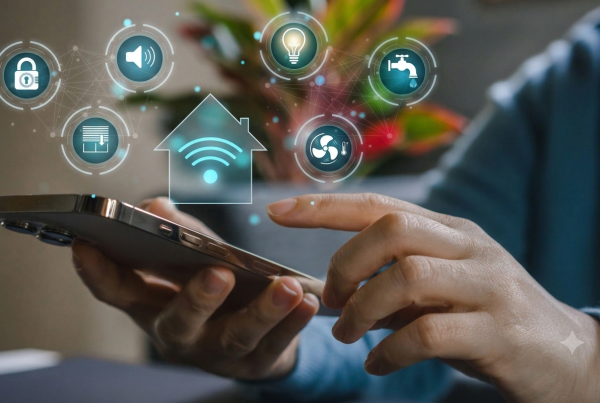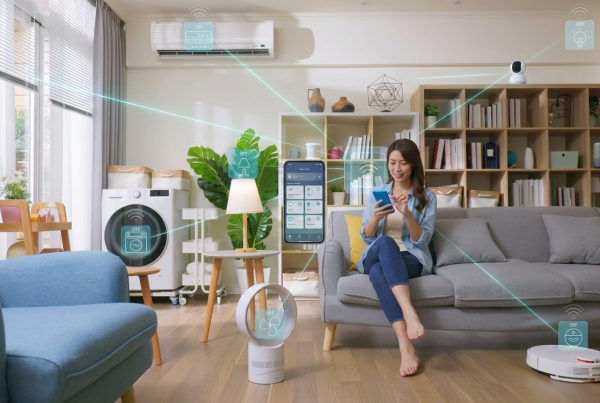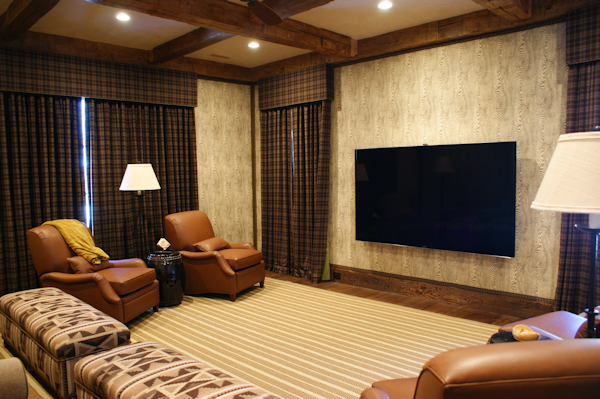
Residential Building construction today relies heavily on technology. Almost everything is “Connected” . Almost every piece of equipment is connected in some way to a network, Wi-Fi or the internet. Technology and Automation play a major role in the building of any residential construction project or remodel.
YOU WILL NEED THESE TECHNOLOGIES IN ALL YOUR DESIGNS!!!
My name is Craig Ormond. I am a sales and design engineer with
Data & Sound Specialties, Inc. We are located in the North Georgia and Atlanta areas of the southeast. We specialize in technology integration and automation. Commonly known in the residential industry as “Smart Homes”. The purpose of this Blog Is to inform. Architects and design professionals of newer technologies they will need to include in their designs.
Living Room
Where’s Equipment?
These first pages will be based on networking. Networking, the Internet and Wi-Fi are three aspects of technology that have changed dramatically in the last decade. Connecting to the internet is no longer an option in everyday life. Connection is necessary for work, education and entertainment. Wired and wireless systems design should be included and installed in every project.
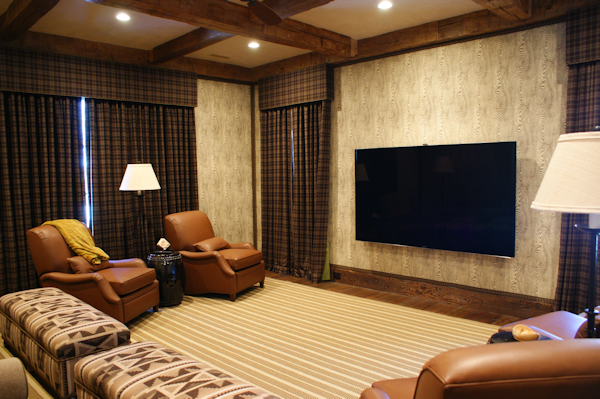
DSS will design a completely integrated system based on your needs complete with drawings, schematics and BOM. DSS can then install and program the system or if you prefer manage the installation. We are fully licensed contractors and members of AVIXA, CTS -D & I, CEDIA & Building Industry Consulting Service International (BICSI).
Wireless technology has come a long way in the past few decades by revolutionizing the way in which humans and systems communicate. 1G to 5G: The Quantum leap in Data speed, latency, capacity and connectivity. But the demand for ever more complex and powerful networks is ever-accelerating, and research is already paving the way for next-generation tech — 6G and beyond. # Wireless communication: 5G, IoT, Challenges & advancements 1G: Wireless Communication Technology Emergence — Analog Voice Transmission This technology was the cornerstone of mobile telephony but it was insecure, had a low capacity, and capacity was affected a lot by interference. This is where it hits 2G and goes from analogue to digital, bringing SMS, MMS and basic data transfer in the 90s. 3G, which arrived in the early 2000s, brought even faster data and with it the mobile internet, video calling and streaming services. This got even better with 4G LTE, which gave way to way higher capacity and capability with far lower lag and better reliability than anything we’d ever seen before, enabling HD video streaming, cloud computing, and IoT applications to become possible. 5G overview 5G is a visionary transformation of wireless communication. With data speeds reaching 10 gigabits per second and ultra-low latency, 5G enables one million connected devices per square kilometer, paving the way for revolutionary applications in areas like autonomous vehicles, smart cities, industrial automation and remote surgeries. The fundamental technologies that power 5G are millimeter wave spectrum, massive MIMO, beamforming, and network slicing. This allows for superefficient, ultrafast, and low-latency communications that span multiple industries. Despite the revolutionary potential of 5G, it has downsides, such as limited availability in rural areas, higher